From Contract Manufacturing to Trusted Supply Chains: Taiwan's Precision Manufacturing Industry Targets New Opportunities in AI and Robotics

In 2026, the global technology supply chain is undergoing profound structural reshaping. Leveraging its deep foundation in precision manufacturing and ICT capabilities, Taiwan is transitioning from traditional contract manufacturing to becoming a core node in the global "Trusted Supply Chain." Under the strategic guidance of the Industrial Development Administration (IDA) of the Ministry of Economic Affairs, Section Chief Shang-Chun Chang led a guidance team alongside the Taiwan-USA Industrial Cooperation Promotion Office (TUSA) and the Taiwan Unmanned Vehicle Systems Industry Development Association (TUVIDA).
Together, they formed the "Taiwan Advanced Technology Boston Delegation" and visited the innovation heartlands of robotics and artificial intelligence in Boston and Cambridge this July. This journey was not merely a technology inspection; it served as a vital engagement to align Taiwan's supply chain with America's top innovation ecosystem, aiming to establish a resilient administrative and technological foundation for Taiwan-US tech collaboration over the next decade. In this strategic initiative, GeneOnline also played a key cross-border role by bridging international resources with its deep-tech expertise.
The delegation showcased the strong vertical integration and resilience of "Team Taiwan." It brought together key research institutions, including the Industrial Technology Research Institute (ITRI), Metal Industries Research & Development Centre (MIRDC), and Precision Machinery Research & Development Center (PMC), alongside industry leaders such as Advanced International Multitech (LAXON), Fukuta Electric & Machinery, YCM (Yeong Chin Machinery), Whetron Electronics, YuYan Co-Creation, and Chie Lung Hsing Gear. Taiwan's precision in ICT integration and component manufacturing highly complements Boston's foundational science, jointly building a trusted chain of security for the drone and robotics industries.
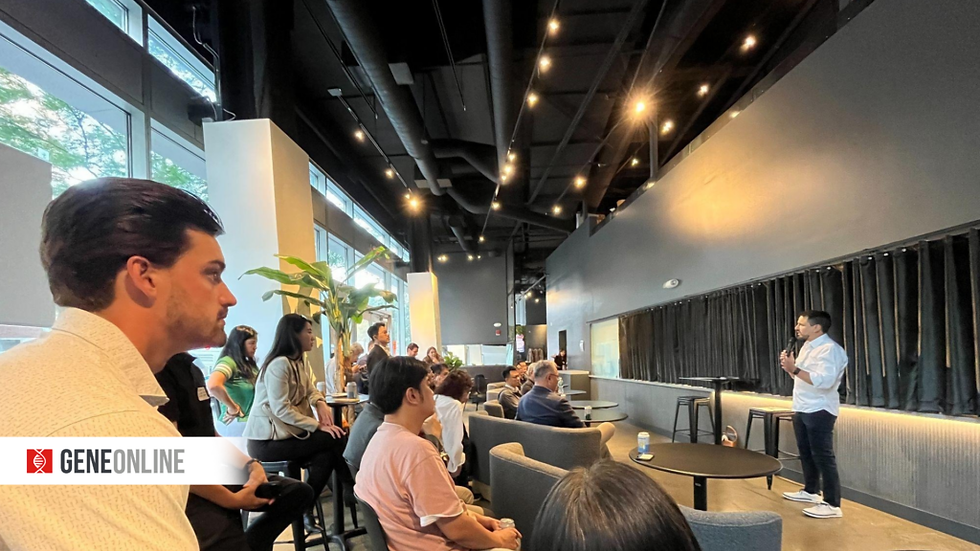
A New Era for AI and Advanced Technology Investments
Investment trends in innovative technology serve as indicators for future industrial development and help Taiwan proactively arrange its industrial strategies. Held in Kendall Square, Cambridge, the "Taiwan Boston Robotics & Drone Happy Hour" event—thoughtfully facilitated by Sophie Hsiao of the Liminal Incubator Fund—gathered 30 Taiwanese and American industry leaders and investors. The gathering successfully transformed into a strategic investment summit centered on Physical AI.
It profoundly demonstrated how Taiwan's supply chain serves as a foundation for global Deep Tech capital returns amid geopolitical risks. Discussions focused on the Boston investment community's demand for Taiwan's precision hardware capabilities: Jackson Saunders and Mark Martin from Cybernetix Ventures highlighted investment trends in automation; Nick Picca from RA Capital explored the future of robotic arms from a life sciences perspective; and Sebastian Barriga from Milemark Ventures analyzed the role of Physical AI in reshaping industrial forms.

Subsequently, Emily Lindberg from Undeterred Capital shared her vision for biological platform technology, while Bernard Lupien from Rhapsody Venture Partners and Ser-Chen Fu from Pacific 8 Ventures discussed their deployments in deep tech and biotech. Together, these insights sent a clear signal: under the global consensus that "Hardware is Hard," Taiwan's manufacturing resilience is the key solution to resolving pain points in Physical AI implementation.

Innovation Hub: MassRobotics and 2035 Robotics Market Trends Analysis
During the delegation's visit to MassRobotics—the world's largest independent robotics innovation center—CEO Thomas Ryden and Community Director Colleen Anderson guided the team through an analysis of global hard-tech investment trends. MassRobotics has nurtured over 250 startups, raised over $2 billion in funding, and secured $180 million in Federal Small Business Innovation Research (SBIR) funding. Early-stage investment analysis indicates that manufacturing ranks first at 19%, followed by defense at 16.8% and logistics at 14.4%, accurately sketching the trajectory of global technology transfer. Looking ahead to 2035, the global robotics market size is projected to reach $421 billion.
This venture capital wave led by humanoid robotics companies like Boston Dynamics, Tesla, and Figure is strongly resonating with Physical AI initiatives from AWS and NVIDIA. In this trend, Taiwanese enterprises act as the bridge connecting "AI brains" with "hardware limbs." Whether in medical services, smart inspection, logistics transport, or advanced manufacturing, Taiwan's precision sensors and high-strength structural components serve as key drivers bringing frontier technologies from labs into the real world.
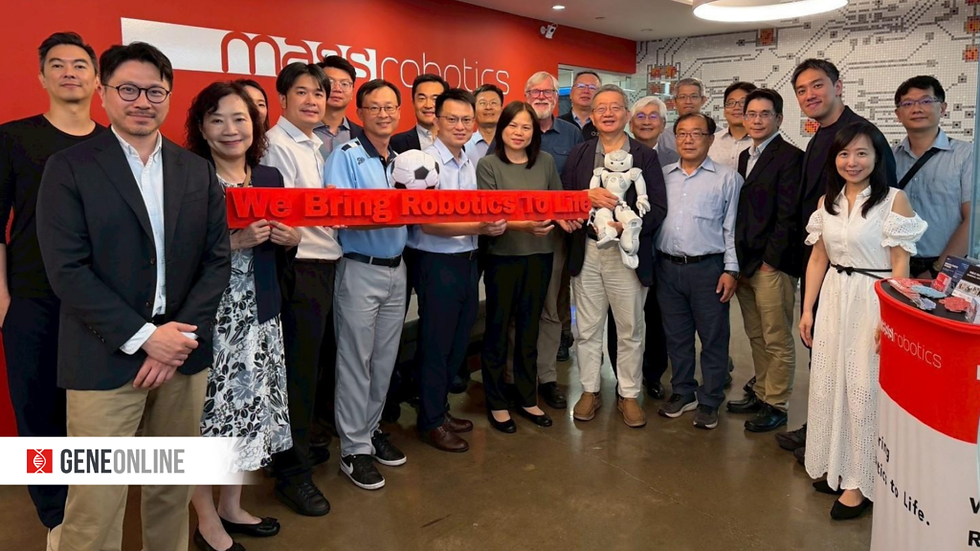
Empowering Smart Manufacturing: Realtime Robotics Simplifies Automated Line Setup
On the advanced industrial applications front, Realtime Robotics became a primary focus for the delegation. This Deep Tech company concentrates on solving the major bottleneck in industrial robotics adoption. Although global manufacturing automation is a clear trend, high setup barriers slow down robot deployment. While industrial robot hardware is already cost-effective (around $50,000 per unit, with operating costs below $1 per hour), the true bottleneck lies in tedious and time-consuming programming and system configuration.
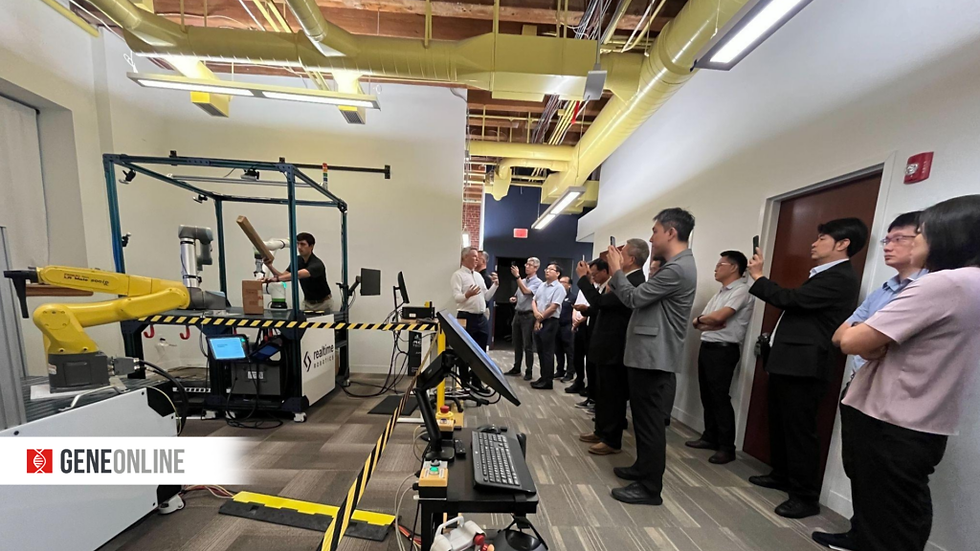
Realtime Robotics unlocks the potential of industrial automation through its advanced automated motion planning system, acting as a crucial enabler particularly in the following areas:
Overcoming "Fully Dynamic" Production Challenges: For high-end production lines like automotive manufacturing, the environment is "fully dynamic"—characterized by large numbers of robots (>25,000 units) and high re-programming frequencies (around three times per week). Traditionally, line adjustments required extensive engineer time to rewrite paths, whereas Realtime Robotics’ technology optimizes motion trajectories in real time.
Significantly Enhancing Line Flexibility and Efficiency: The technology handles complex dynamic environments, allowing tens of thousands of robots to be rapidly configured and deployed under frequently changing production needs, meeting the automotive industry's strict demands for high customization and quick adaptability.
Driving Industry Standardization: Thanks to its technical potential, Realtime Robotics has secured strategic investments and partnerships from global automation leaders like Toyota Ventures, Mitsubishi Electric, Omron, and Siemens. Its collision-free motion planning technology has been adopted by top automakers like BMW and Volkswagen as an official supply chain solution, becoming a standard feature in next-generation smart manufacturing.
In autonomous marine navigation, the delegation engaged with Sea Machines Robotics, a leading global provider of autonomous vessel control and navigation technology. The company empowers commercial and specialized vessels with high-performance autonomous navigation and defense capabilities, accumulating over 200,000 nautical miles in real-world sea trials. Its technology has been adopted by flagship government innovation units and high-standard autonomous navigation programs, demonstrating reliable marine technology standards and opening up new possibilities for Taiwan-US collaboration in unmanned maritime vessels and smart shipping.
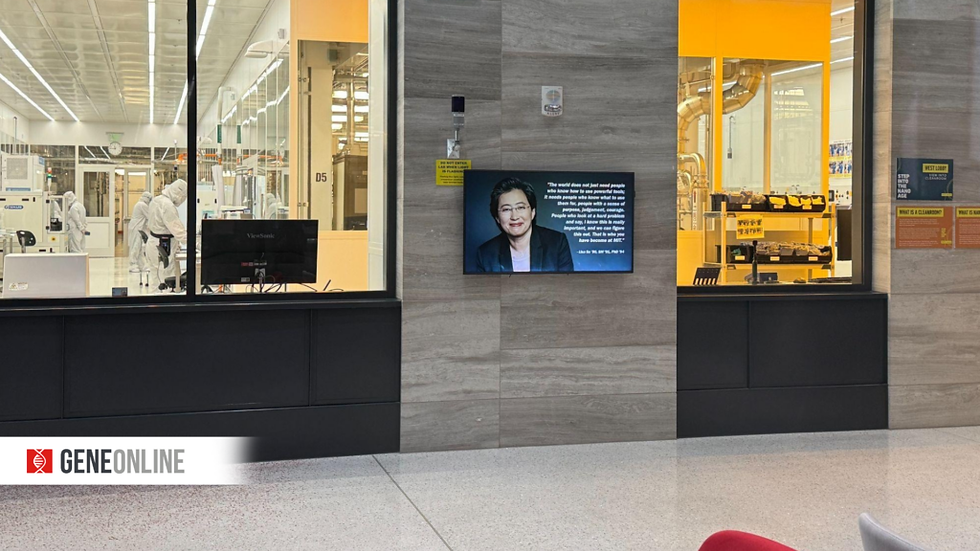
Regarding AI and advanced technology R&D, the delegation visited three premier laboratories: Harvard John A. Paulson School of Engineering and Applied Sciences (Harvard SEAS), MIT Computer Science and Artificial Intelligence Laboratory (MIT CSAIL), and Dartmouth Multi-Agent Decision Control and Autonomous Technology (MADCAT) Lab. They held in-depth discussions with leading scientists and strategic alliance executives on multi-agent control and bio-inspired technology.
Harvard Engineering Vision: Soft Robotics and Translational Research
The delegation's first academic stop was Harvard SEAS. Inside the futuristic Science and Engineering Complex (SEC), members experienced how academic theory translates into transformative engineering solutions. In discussions with Interim Dean David Hwang, Industry Partnership Manager Michelle Lane, and Harvard Grid Executive Director Paul Hayre, the delegation gained deeper insights into the core value of "Translational Research." In particular, the Harvard Grid model is designed to "de-risk" advanced technologies developed by faculty through mentorship and early-stage funding, accelerating soft robotics and bio-inspired robotics from laboratory research to commercial markets. Harvard’s leadership in surgical micro-robotics and wearable assistive devices offered new perspectives for Taiwan’s supply chain to shift from contract manufacturing to high-value technology services. This human-centric, healthcare-value-adding R&D orientation reflects deep humanistic care within technology development.

MIT CSAIL Technology Origin: Global AI Theory and Industry Alliances
At the MIT Computer Science and Artificial Intelligence Laboratory (MIT CSAIL), the delegation met with Glenn Wong, Interim Managing Director of Global Strategic Alliances. As a global birthplace of AI technology, CSAIL shared insights into AI research across multiple MIT labs and reviewed historic cases of commercializing research into industry-defining companies—from early radar developments to modern disruptors like Dropbox and Akamai. They also highlighted promising spin-offs. Through its mature "CSAIL Alliances" program, CSAIL transfers cutting-edge system designs and computational theories to tech giants like NVIDIA and Google. During this engagement, Taiwan's technical capabilities earned high recognition.
Dartmouth College: Multi-Agent Control and Cyber-Physical Infrastructure Security
In Hanover, New Hampshire, guided by Dr. Yeonglong Ay at Dartmouth College, the delegation visited the MADCAT Lab hosted by Professor Bryce Ferguson and the Reality and Robotics Lab presented by Professor Alberto Quattrini Li. The labs demonstrated applications of control theory, game theory, and optimization algorithms in "Multi-Agent Decision Control." These research areas resolve dynamic coordination for drone fleets and autonomous vehicles while providing strategic "Cyber-Physical Defense" for smart power grids. Combining game theory with distributed control, this research approach enhances the resilience of robotic systems and offers vital scientific foundation for Taiwan to build resilient infrastructure.
This visit also highlighted the strong technology translation capabilities of Taiwan's research institutions and academia. ITRI showcased navigation-grade Inertial Measurement Units (IMUs) and gas-sensing systems providing precise environmental perception for autonomous vehicles; PMC demonstrated digital transformation track records connecting tens of thousands of machine tools, proving Taiwan's scalability in smart manufacturing; and MIRDC supported high-value module development through advanced casting technologies. On the academic side, Professor Ming-Der Yang's team from National Chung Hsing University (NCHU) presented the "Demeter Agent" large language model, demonstrating how AI empowers smart agriculture decision-making. Meanwhile, Dean Heng-Sheng Lin from National Kaohsiung University of Science and Technology (NKUST) led the Apollo Solar Car Team, illustrating future visions for integrating smart urban mobility with green energy. These research capabilities provided solid scientific backing for dialogues with top Boston laboratories.
A Historic Moment in Taiwan-Boston Strategic Synergy
Beyond technology and capital exchanges, official support from the Boston municipal government established a solid foundation for business landings. During a visit to the Boston Mayor's Office of Economic Opportunity & Inclusion, the delegation met with Director of Commercial Strategy Alia Hamada Forrest and International Business Strategy Manager Yuxi Wang. Both sides reached strong consensus on administrative support, local resource matching, and talent cultivation.
The Boston government highlighted its status as one of the world's most attractive cities for foreign investment, echoing Acting Chief Donald Wright's policy commitment to keeping doors wide open. This meeting built official communication channels and policy foundations for Taiwanese firms establishing North American R&D centers or local production, ensuring Taiwan-US cooperation extends from short-term visits to long-term strategic mutual benefit.
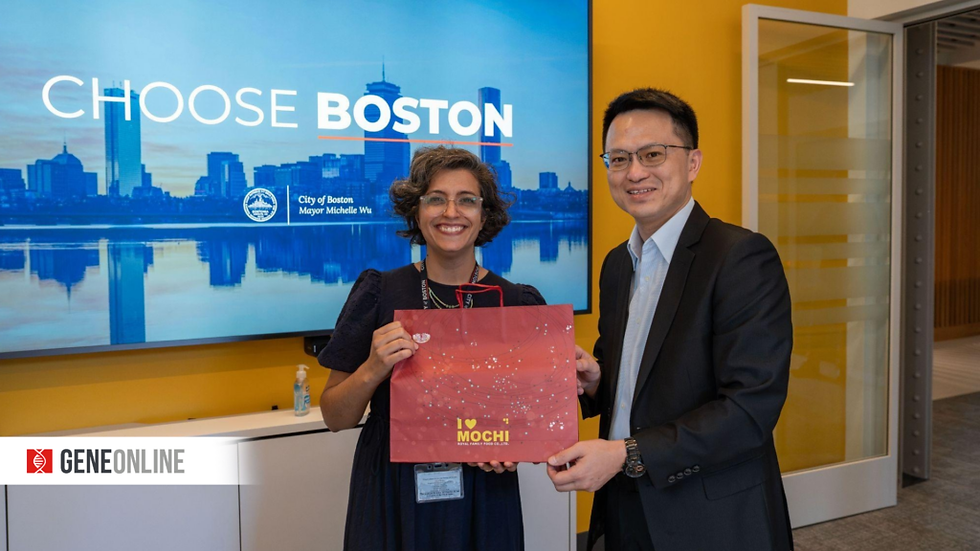
The trip culminated in the "Taiwan-Boston AI Drone & Robotics Forum" held at CIC Venture Café. Attracting over 100 local experts to a packed venue, the forum featured forward-looking remarks from Shih-Chia Yeh (Director of the Investment and Trade Office in New York), Donald Wright (Acting Chief of the Boston Economic Opportunity & Inclusion Office), and Tim Rowe (Founder and Executive Chairman of CIC), emphasizing the natural complementarity between Taiwan and the US in innovation R&D and precision manufacturing. Marking their friendship, Section Chief Shang-Chun Chang and Director Shih-Chia Yeh presented a special Taiwanese commemorative gift to Boston representative Donald Wright on stage.
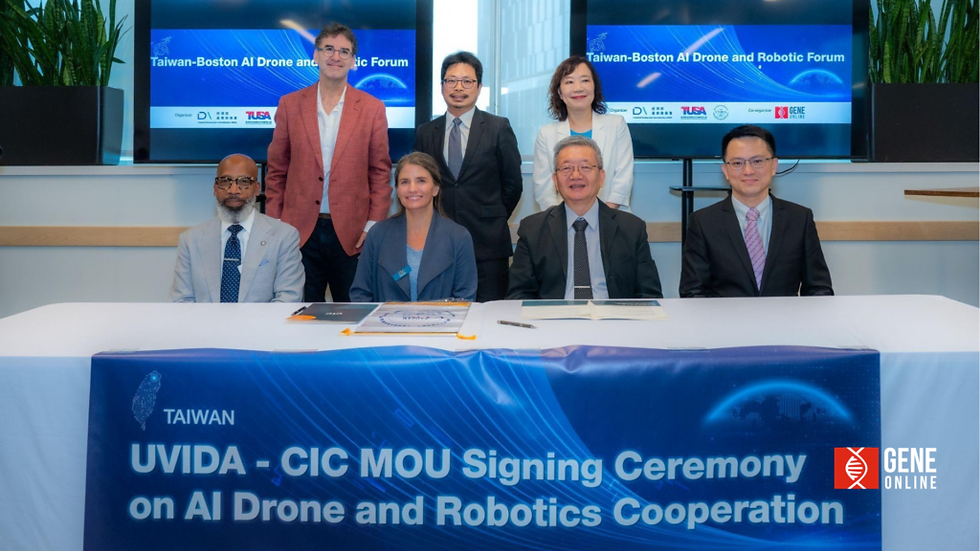
The most tangible strategic outcome of the trip was the formal signing of a Memorandum of Understanding (MOU) between TUVIDA and the Cambridge Innovation Center (CIC). Witnessed by IDA Section Chief Shang-Chun Chang and Acting Chief Donald Wright, CIC CEO Denyse Medlenka and TUVIDA Chairman Chiu-Feng Lin signed the agreement, opening a two-way pathway: assisting Taiwanese enterprises in entering North American defense and commercial supply chains while establishing Taiwan as an Asian R&D and manufacturing hub for North American companies.

TUVIDA Chairman Chiu-Feng Lin noted that Boston excels at "0-to-1" invention, whereas Taiwan serves as the ultimate backbone for "1-to-many" scaling—a model where the US formulates problems and Taiwan provides solutions. Alongside Taiwanese technological showcases, more than five local Boston AI drone and robotics startups shared cutting-edge technologies (such as drone advertising and tactile sensing), providing local capital and startups their first direct exposure to the strengths of Taiwanese enterprises.
The successful conclusion of the 2026 Taiwan Advanced Technology Boston Delegation marks a milestone as Taiwan and the US step into long-term strategic reciprocity across high-end technology sectors. Taiwan demonstrated its indispensable role as a core node in the global trusted supply chain. By joining Boston's top-tier Physical AI research capabilities with Taiwan’s world-class precision manufacturing and rapid prototyping power, both sides are joining forces across smart manufacturing, advanced industry, marine autonomy, and sustainable mobility. Moving forward, Taiwan and the US will continue deepening ecosystem dialogues based on this mutually beneficial model, jointly creating a resilient and innovative future as the global AI, drone, and robotics industries expand.
Source of Information: GENE ONLINE


Comments